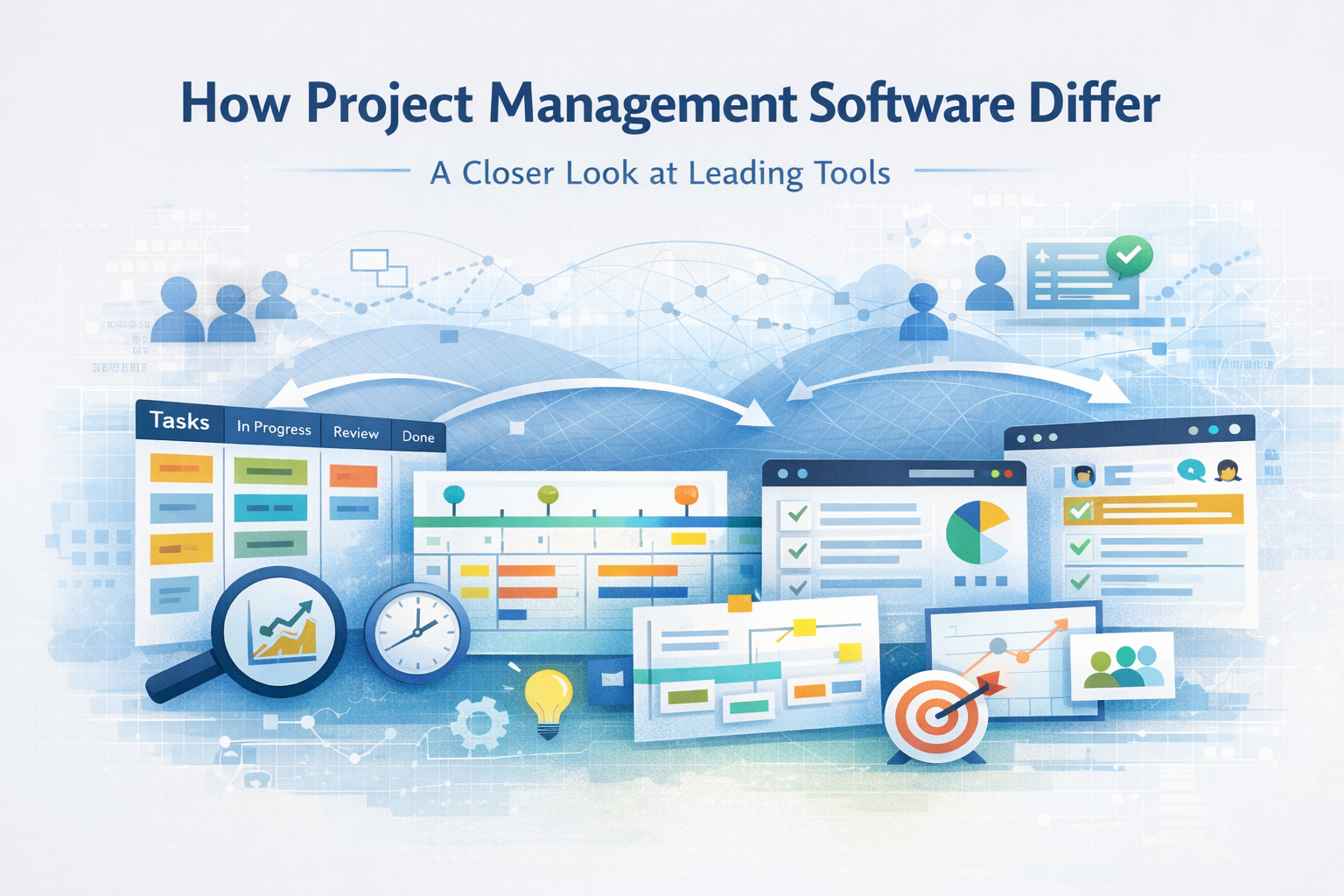
Project management tools are among the most dynamic categories of business software today. Modern teams expect their PM platforms not just to track tasks, but to organize work, enable collaboration, visualize progress, and support diverse methodologies like Agile, Kanban, or traditional planning.
Yet when teams begin their hunt for the best project management software, they often discover there isn’t a single universal champion. Instead, what matters is how a tool fits the way your team actually works.
In this article, we explore several prominent approaches and illustrate how different tools embody those approaches — helping you match your work style to the right solution.
A Flexible Canvas for Every Workflow
Some project management platforms shine because they flex to fit nearly any workflow. They give you many views of the same work — whether you prefer lists, calendars, boards, timelines, or Gantt charts.
When flexibility is the priority, tools that offer:
- Multiple visualization styles
- Adaptable task structures
- Customization without complexity
help teams see their work in whatever way feels right for the moment. This sort of adaptability is valuable for teams tackling varied projects that shift by phase or priority.
Simple and Intuitive for Everyday Use
On the other end of the spectrum, some tools embrace simplicity as their strength. These solutions are built around straightforward task tracking and visual clarity — ideal for teams that want minimal setup and immediate adoption.
For people or teams who:
- Don’t want complex rules or rigid structures
- Prefer visual boards that reflect real work
- Value ease of use above deep configuration
simpler interfaces can reduce friction and make project routines more predictable.
Planning and Structure for Complex Projects
Some organizations require more than a kanban board or a to-do list — they need to plan work across time, dependencies, and resources. In these contexts, tools that emphasize:
- Timeline views and task dependencies
- Resource allocation and scheduling
- Budgeting and project forecasting
provide a level of structure that supports long-range planning and coordination across teams. These features help teams see the big picture while staying grounded in everyday execution.
Collaboration First — Bringing Everyone Together
Not all project tools start with tasks; some start with people and communication. For teams where alignment and collective visibility are core, project management tools that integrate:
- Comments, chats, and threaded conversations
- Shared dashboards and real-time updates
- Integrated documentation
do more than track work — they become the hub of team collaboration and institutional memory. These platforms support teams where coordination and communication are as important as execution.
Goal-Oriented and Targeted Workflows
Beyond general task and project tools, there’s a growing category focused on strategic alignment and outcomes. These platforms help teams turn high-level plans into executable work, often with:
- Goal tracking and strategic planning workflows
- Visibility into key metrics and results
- Features that support cross-team coordination
This approach appeals to teams where execution is tightly tied to bigger goals or where cross-functional alignment matters for success.
The Right Tool for How You Work
Every project management tool reflects an underlying philosophy about work — whether that’s visual simplicity, structured planning, collaboration first, or strategic direction. The best choice isn’t one that’s highest-rated in isolation, but one that aligns with the way your team:
- thinks about work,
- tracks progress, and
- communicates results.
That also means experimentation can be valuable: trying a solution for a few weeks often reveals whether it complements or clashes with your team’s rhythm.
Conclusion
There is no single “best project management software” for all teams. What matters most is how a tool complements your process — whether you need structure, flexibility, clarity, or collaboration.
Modern project management software creates systems that reflect how you think about and execute work. The right tool doesn’t force your team to fit its mold; it fits your team’s mold.
